Life Skills
Life skills development focuses on learning and practising the everyday tasks you want to manage with greater confidence. For an NDIS participant, a useful goal might be preparing a familiar meal, organising a weekly routine or learning the steps of a regular journey.
Independence looks different for everyone. It can mean completing a task yourself, choosing when to ask for assistance or having a reliable way to make decisions and communicate what you need.
Start with a task that matters in your life
Choose a goal that solves a real problem or creates an opportunity you care about. “Become more independent” can feel too broad. “Prepare my lunch before my Thursday activity” gives you and your worker a clear place to start.
Write down what you already do, which part is difficult and what would count as progress. Include the tools, communication methods and pace that help you learn. There is no need to work on everything at once.
Everyday skills you could explore
- Meal routines: Planning a simple meal, following steps and organising ingredients.
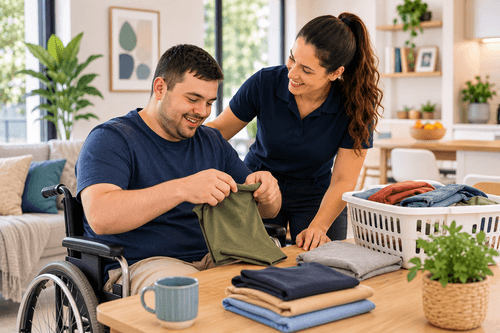
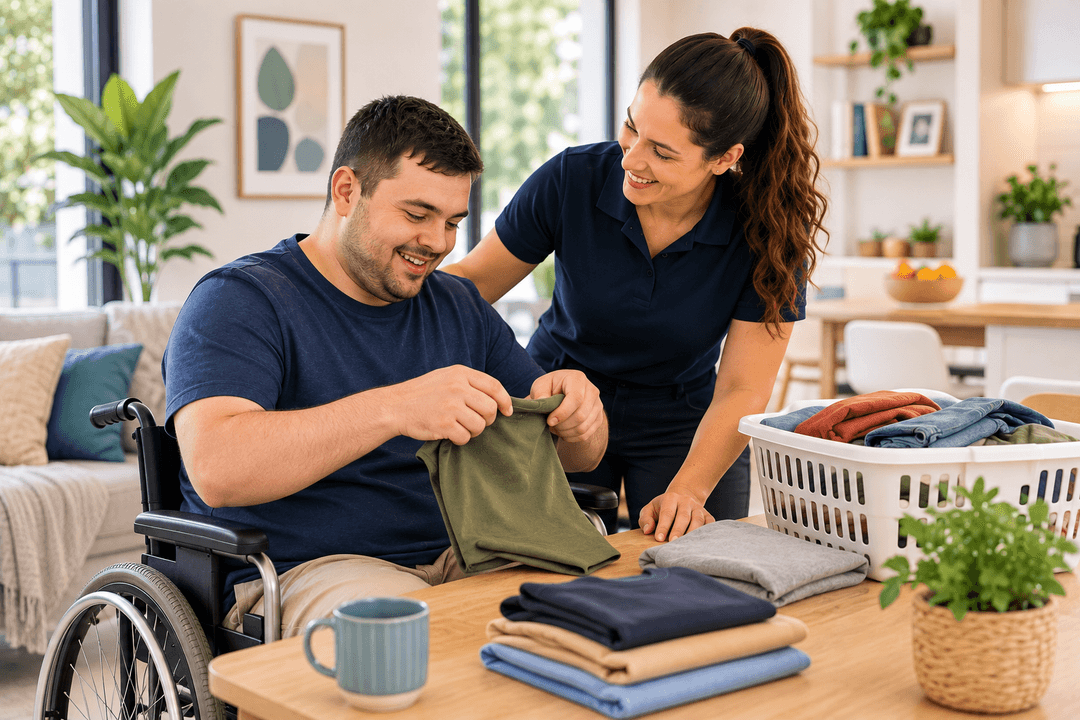
- Household routines: Sorting laundry, putting belongings away and remembering regular tasks.
- Shopping: Writing a list, locating items and checking the total at the checkout.
- Time and organisation: Using reminders, preparing for appointments and planning a week.
- Community confidence: Asking for assistance, arranging a meeting point or practising a familiar route.
These are examples of goals to discuss. The skills you choose and the assistance required should reflect your preferences and circumstances. A support worker should not take over a task simply because that is faster.
Break a goal into manageable steps
Consider a hypothetical goal of preparing a cold lunch. A starting plan could involve choosing between two familiar meals, checking ingredients, following a picture sequence and putting items away afterwards. Agree on the steps you want to try and the points where help is needed.
Practise in the setting where you will use the skill. Keep useful prompts consistent and review whether they still help. If a step is frustrating, consider changing the explanation, environment or size of the task before deciding that the goal is unsuitable.
Understand the difference between assistance and learning
Help completing a task today and structured work to develop a skill may have different purposes. The NDIA describes capacity building supports as supports that develop skills and independence; relevant categories can include improved daily living. Funding in these categories is stated and must be used as described in the plan. Read the NDIA’s capacity building guidance.
Ask your provider how the proposed activity fits your plan and how it will be described on an invoice. Do not assume that any course or general coaching program is an NDIS support because it mentions confidence or independence.
Work with existing professional advice where needed
Some activities require specialist assessment or instructions. For example, a daily routine may need to account for mobility, communication or other support needs. Ask how your worker will follow relevant advice from your allied health professionals, with your consent, and stay within their role.
Practical support is not a substitute for an assessment or therapy when one is needed. A clear division of responsibilities helps everyone understand who is teaching, who is assisting and who should review a concern.
Common questions
How can I tell whether the support is helping?
Choose an observable sign of progress: fewer prompts, making a choice more confidently or completing one extra step. Review your own experience as well as the worker’s notes. You can change the goal if your priorities change.
Does progress mean I must stop receiving assistance?
No. Learning and ongoing assistance can work together. Discuss the balance that suits your needs rather than treating complete independence as the only worthwhile outcome.
Plan your next goal with Harissons Disability Care
Explore Harissons Disability Care’ development of life skills service and community skill-building options. Contact the team to discuss one practical goal, your location and current availability. You may also find our guides to personal care and life stage transitions useful.
Information checked 4 September 2026.